• Overview
  • Page 1 Chronology
  • Additional Pages:
    • Page 2 Chronology
    • Page 3 Military legacy
    • Page 4 Artifacts & more
    • Page 5 History & Sports
    • 6. Recognition-Enthnonyms
    • Page 7 Hiawatha
    • Page 8 Dance
    • Page 9 Leadership-Leaders
    • Page 10 Women
  • The Bear Blog
  • FAQ
  • More
    • Overview
    • Page 1 Chronology
    • Additional Pages:
      • Page 2 Chronology
      • Page 3 Military legacy
      • Page 4 Artifacts & more
      • Page 5 History & Sports
      • 6. Recognition-Enthnonyms
      • Page 7 Hiawatha
      • Page 8 Dance
      • Page 9 Leadership-Leaders
      • Page 10 Women
    • The Bear Blog
    • FAQ
  • Sign In
  • Create Account

  • My Account
  • Signed in as:

  • filler@godaddy.com


  • My Account
  • Sign out

Signed in as:

filler@godaddy.com

  • Overview
  • Page 1 Chronology
  • Additional Pages:
    • Page 2 Chronology
    • Page 3 Military legacy
    • Page 4 Artifacts & more
    • Page 5 History & Sports
    • 6. Recognition-Enthnonyms
    • Page 7 Hiawatha
    • Page 8 Dance
    • Page 9 Leadership-Leaders
    • Page 10 Women
  • The Bear Blog
  • FAQ

Account

  • My Account
  • Sign out

  • Sign In
  • My Account

The ethnonym footprint of the collective nation.


THE HISTORIC - ERA APPROPRIATE NAMES ARE USED

.

Usage of the names:

"Chippewa" Lake Superiour side wheeler 1893.

wikicommons


The images on this page show the historical ethnonym or tribal name being used in society at different levels. Some represent a first-level footprint, where a town, river, lake, road, or other place is named for the people themselves. At the next level, that name may be carried forward through the place: products are named for the town, or businesses and manufacturers in the community use the name as a commercial brand.

Each represents another point at which the public encountered the Chippewa name, adding to its historical documentary footprint. For many people, the name was encountered not through history books, but through transportation, commerce, work, recreation, and the ordinary activities of daily life.

The name could move through successive levels of society while retaining a connection to the original people. Each level represents another form of recognition, acknowledgment, and transmission of the collective nation's presence. Throughout the record the name Chippewa is more prevalent than all the others combined.


The commercial use of the Chippewa name extended well beyond products and company titles. Businesses, railroads, mining corporations, manufacturers, and ships carried the name into everyday public life through:

  • Advertisements
  • Ferry tickets
  • Railroad timetables
  • Invoices and shipping records
  • Stock certificates
  • Financial reports
  • Product labels and packaging
  • Boot boxes
  • Fishing tackle packaging
  • Medicine bottles
  • Uniforms
  • Official commercial and military records


1845   In Michigan, the Chippewa Copper Mining Company began work at Copper Peak Chippewa Hill site,


1858-9 Ojibway Gold Mine started with lead and zinc secondary metals. https://thediggings.com/mines/usgs10191492


1873  Ojibbeway Coal Company, Dodgeville Chronicle (Dodgeville, Wisconsin) 


1904-5  Chippewa Blood Cordial was marketed in Washington D.C.


1910-7   Immell Bait Company / Immell Bait & Tackle Company, in Blair, Wisconsin produced the Chippewa lure in six different sizes and a dozen colors, 


1923-4  Chippewa Coal Mine, Saginaw County, Michigan


1897  The Chippewa Copper Mine began operation in Douglas Co. Wisconsin. https://www.mindat.org/loc-51666.html


1953 and 1954 Studebaker Commander coupes could be ordered in Chippewa Green.


1980  Chippewa Coal Co., Feds Creek, Kentucky 


2018  Chippewa fishiing Lures More than a century after their manufacture, Chippewa lures are among the most sought-after name in the collectible sporting goods field. At a major Canadian auction conducted by Miller & Miller Auctions in October 2018, eight of the ten highest-selling lots were Chippewa spinner lures manufactured about 1910 by the Immell Bait & Tackle Company of Blair, Wisconsin. The top example, complete with its original box, sold for CA$10,030. The sale included forty-eight Chippewa lure lots and grossed over CA$175,000. 


2024   In a 2024 Blanchard's Auction, a boxed Floating Chippewa Minnow sold for $20,295, and another slightly larger example brought $17,835. Those prices blew past estimates of only $700–1,000.  


#152 "Chippewa" a 4-6-2 "Pacific" locomotive with her distinctive color scheme and huge "Hiawatha" logo on the tender. ca. 1940. "Chippewa" was emblazoned on the side of the running boards above the divers. Other non-stream lined locomotives were added with the same colors with "Chippewa" across the top of the tenders. Known locomotives labeled "Chippewa" were engines: # 150, 151,152, and 197. During WWII B-17 43-38889 of the 324th Bomb Squadron, 8th Air Force, was named the "Chippewa Chief-The Milwaukee Road". She logged over 50 missions against Germany and returned to the USA.

The Milwaukee Railroad initated Streamlined passenger service from Chicago to Ontonagon, Michigan in 1937 continuing until 1960. The Milwaukee also ran the Chippewa Valley Line that was initiated in 1882.

© Canadian Pacific Kansas City Ltd.

1868 Wisconsin paddlewheel Packet boat the "Chippewa" on the west Eau Claire Levee.

In 1859 the American Fur Company steamboat "Chippewa" was the first packet to reach Fort Benton trading post.[15] The American Fur Company acknowledged the indigenous by naming riverboats for the tribes it traded with.                   


 "Names of Steamboats," Compiled by Capt. F.L. (Fielding) Wooldridge (1879-1941)

https://www.umsl.edu/mercantile/pott/pott-collection-supplements/pott013-steamboats-2.html


wikicommons



Gallery I: The historic public/commercial footprint of the ethnonyms recording recognition/acknowledgment ☞

https://img1.wsimg.com/isteam/ip/51af781d-55d8-4651-bcd9-7668931ec27c/Screenshot%202026-08-12%20023942.jpg

    The tug Chippewa, 1935 on the Eire Canal. She worked for the "Motor Tug Chippewa Inc." In 1940 the US Navy acguired her and renamed her the USS Annawan, YN-50. In Ojibwe "Annawan" literally means “the one who is pulled” or “the one who is given a tug”. The name reflects a deliberate use of the Ojibwe language in commercial maritime service rather than simply the adoption of the ethnonym.

    https://www.navsource.net/archives/14/22050.htm

    "Chippewa" retired WWII Navy tug YTL-361. She was christened the "Chippewa" in 1976.

    ©facebook.com/TugChippewa

    MV Chippewa car ferry on Puget Sound. At a huge expense she was reconfigured from a passenger ferry into a vehicle ferry in the 1930's.The "Chippewa" was an integral element of life on the sound.

    public domain

    SS Chippewa, ca.1936

    Other vessels named with Ojibwe words not in the Song of Hiawatha or ethnonyms sections:
    • KEEGO  —  yacht 1909 Canadian
    • PIKOUAGAMI  — tug 1906 Canadian
    •  BATCHAWANNA  — tug 1912 Canadian
    • TEMAGAMI  —  yacht 1905 Canadian
    • WAUBAUSHENE  — lumber tug 1882 renamed twice, 97 tons Canadian
    • WAUBAUSHENE  —  tug 1904, 135 tons, Canadian
    •  WAUBIC  — freighter 134' 1909 Canadian
    •  Wawinet ? yacht Canadian
    • MACKINAC (1903) — the 110-foot Revenue Cutter taken by the Navy in 1917.  
    • MACKINAC (1949), WHEC-371 — originally a Navy vessel, transferred to USCG in 1949.  
    • MACKINAW (1944), WAGB-83 — the original Great Lakes icebreaker. 
    • MACKINAW (2005), WLBB-30 —  Great Lakes icebreaker.  


    Fraternal Organizations: Local branches adopted Ojibway - Chippewa names.

    *  Improved Order of Red Men I.O.R.M. — Patriotic 

    *  Freemasons A.F. & A.M. — Fellowship 

    *  Ladies' Auxiliaries — Community Support

    *  I.O.O.F.  — Charity 

    *  Sons of Hermann — Mutual Aid

    *  Brotherhood of Railroad Trainmen — Mutual Aid


    •  Ojibway Tribe No. 1 — La Crosse, Wisconsin
    • I.O.R.M. Chippewa Tribe No. 4 — Detroit, Michigan  1870 
    • I.O.R.M. Ojibwa Tribe No. 5 — Superior, Wisconsin 1906, (is in the 1906  U.S. Congressional Record) 
    • I.O.R.M. Chippewa lodge No. 10 — Minneapolis, Minnesota
    • I.O.R.M. Chippewa Tribe No. 14  Edgefield, S.C
    • I.O.R.M. Chippewa Tribe No. 14 Milton, Delaware
    • I.O.R.M. Chippewa Tribe No. 19 — Frederick, Maryland May 3, 1850 (is in the 1860 U.S. Congressional Record)
    • I.O.R.M. Chippewa Tribe No. 26 — Fort Wayne, Indiana 1876–7
    • I.O.R.M. Chippewa Tribe No. 28 Milford, Delaware 
    • I.O.R.M. Chippewa Tribe No. 40 Marshalltown,Iowa 1905
    • I.O.R.M. Chippewa Tribe No. 47  —  West Bay City, Michigan 1900
    • I.O.R.M. Chippewa Tribe No. 49 — Telluride, Colorado 
    • I.O.R.M. Chippewa Tribe No. 50 — Atlanta, Georgia 1910–11
    • I.O.R.M. Chippewa Tribe No. 51 — Philadelphia
    • I.O.R.M. Chippewa Tribe No. 60 — Frederick, West Virginia
    •  A.F. & A.M. Manitou Lodge No. 105 — New York City — 1896
    •  A.F. & A.M. Manitou Lodge No. 106 — New York City — 1845/1846 
    •  A.F. & A.M. Manitou Lodge No. 108 — New York City — 1896
    •  A.F. & A.M. Chippewa No. 136 Wisconsin
    • I.O.R.M. Chippewah Tribe No. 140 — Woodstown, New Jersey 1903
    • I.O.R.M. Chippewa Tribe No. 169 — Sullivan, Illinois 1904
    •  I.O.R.M. Chippewa Lodge No ? — Rock Island, Illinois  1884. 
    •  I.O.R.M. Chippewa Lodge No ? — Barnesvill, Ohio  
    • Chippewa Falls lodge No. 176 A.F. & A.M. 
    •  A.F. & A.M. Chippewa lodge  No. 275 Bigfork, Minnesota
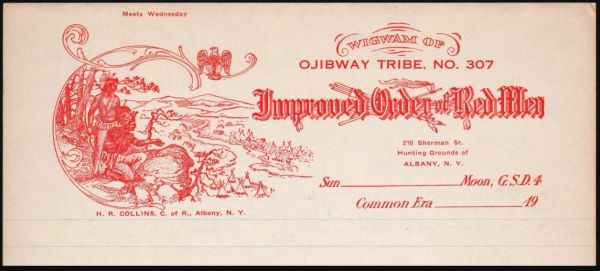
    • I.O.R.M. Ojibway Tribe No. 307 — Albany, New York 1905  
    •  Chippewa Lodge No. 410 — Abbotsford, Wisconsin, appearing in the 1902 Congressional Record. Brotherhood of Railroad Trainmen
    • I.O.O.F. Manitou Lodge No. 8 — Marshalltown, Iowa
    • I.O.O.F. Chippewa Lodge No. 472 — Ontario, Canada 
    • (I.O.R.M.) Ojibway Tribe No. 496 — Milesburg, Pennsylvania 
    •  Chippewa Lodge No. 662, Stevens Point  Ladies Auxiliary   
    • Chippewa Lodge No. 764 — Brotherhood of Railroad Trainmen, Montevideo, Minnesota. The 1932 Congressional Record
    • Chippewa Lodge No. 35 — Sons of Herman, Wisconsin.
    • Chippewa Valley Lodge No. 888 — Brotherhood of Railroad Trainmen
    • Order of the Eastern Star Chippewa Chapter No. 112 Chippewa Falls, Wisconsin 
    • Royal Arch Masonry Chippewa Chapter No. 46,  Chippewa Falls, Wisconsin 
    • Knights Templar Chippewa Commandery No. 8  Eau Claire, Wisconsin 1868
    • Chippewa Lodge — Knights and Ladies of Honor — St. Louis, Missouri 1902  
    • Masonic youth  Chippewa Valley Chapter of DeMolay — Eau Claire, Wisconsin
    •  A.F. & A.M. Chinguacousy Lodge No. 738 — Brampton, Ontario. 1987
    • Chippewa Lodge No. 1326 B.P.O.E Chippewa Falls, Wisconsin 1921 
    • Chippewa Lodge No. 35 — Sons of Hermann  Wisconsin
    • Chippewa Lodge No. 496 — Order of Moose,   Mt. Pleasant, Michigan
    • Chippewa Tribe, Hilltop Nation, YMCA Indian Guides — Columbus, Ohio 1959
    •  Kenozha Council No. 9, Degree of Pocahontas, Salem, Massachusetts (fish)  
    •  I.O.R.M. Manitou Tribe No. 18 — Delaware
    •  I.O.R.M.Manitou Tribe No. 87 — Fall River, Massachusetts 1904
    •  I.O.R.M. Manitou Tribe No. 31 — Eminence, Kentucky
    •  I.O.R.M. Manitou Tribe No. 18 — Delaware
    •  I.O.R.M. Manitou Tribe No. 53 — Fortville, Indiana
    •  I.O.R.M. Manitou Tribe No. 125 — San Francisco 1902
    •  I.O.R.M. Manitou Tribe No. 125 —Easton, Pennsylvania, 
    •  I.O.R.M. Manitou Tribe No. 128 — San Francisco 1910
    •  I.O.R.M. Manitou Tribe No. 426 — South Bend , Indiana
    •  I.O.R.M. Manitou Tribe No. ? — York, Pennsylvania, former Conesingo Tribe 1906
    • I.O.R.M. Manitou Tribe No. ? — Oakland, California 1902
    •  I.O.R.M. Ojibway Tribe No. 307, Albany, New York, 1905
    •  I.O.R.M. Ojibway Tribe No. 496 Milesburg, PA 
    • I.O.R.M. Degree of Pocahontas, Ojibway Council, Albany , New York, 1905
    • I.O.R.M.  Ojishonda Tribe No. 434, Indianapolis (placing the stars in the sky)
    •  I.O.O.F. Manitou Lodge No. 8 — Tipton, Iowa, 1848  
    • I.O.O.F. Manitou Lodge No. 71 —  Manitou, Colorado 1901
    •  I.O.O.F. Manitou Tribe No.? —  San Francisco, California 
    • A.F. & A.M. Manitou Lodge No. 106 — New York City 1846; 1845. 
    • A.F. & A.M.Manitou Lodge No. 68 — Manitou Springs, Colorado 1887
    • Loyal Order of Moose, Manitou Lodge No. 1107 —  Rochester, Indiana 1912
    • Fraternal Order of Eagles Manitou Aerie No. 852 —  Rochester, Indiana
    • Woodmen of the World, Camp Manitou, Colorado
    • Good Templars Manitou Lodge 279 Milbank, South Dakota
    •  Knights of Pythias Manitou Lodge — Salt Lake City, Utah — 1892 
    • Eau Claire Knights Templar of the Chippewa Commandery


     Manitou — broader Algonquian Indigenous term; included in the footprint because it was adopted as an organizational name, but not identified as exclusively Ojibwe. 


    * I.O.R.M =  The Improved Order of Red Men.- mission  is to promote freedom, friendship, and charity through community service, patriotism, and the preservation of American history and traditions 

    * I.O.O.F. =  Independent Order of Odd Fellows-  mission is to promote friendship, love, and truth, while providing mutual aid, community service, and support to those in need. 


    Chief Wawatam railroad ferry unloading at Mackinaw City, Michigan in 1981. Chief Wawatam is famous for being at Fort Michilimackinac and rescuing the fur trader Alexander Henry in 1763.

     ©Garland McKee


    Gallery II: continued record of the tribal recognition ☞

    ca. 1906-17 Unissued Nipissing Mines Co. stock certificate, Cobalt, Ontario.
    This certificate is held by the Yale University Art Gallery, documents the name Nipissing in the North American financial marketplace placing the name
    Nipissing in everyday commercial and financial world away from its original geographic setting. 


      MV Ardmore CHIPPEWA, Oil/Chemical Tanker:

      521' length 

      87' beam,

      12 knots 

      launched 2015

              © Ardmore Shipping          
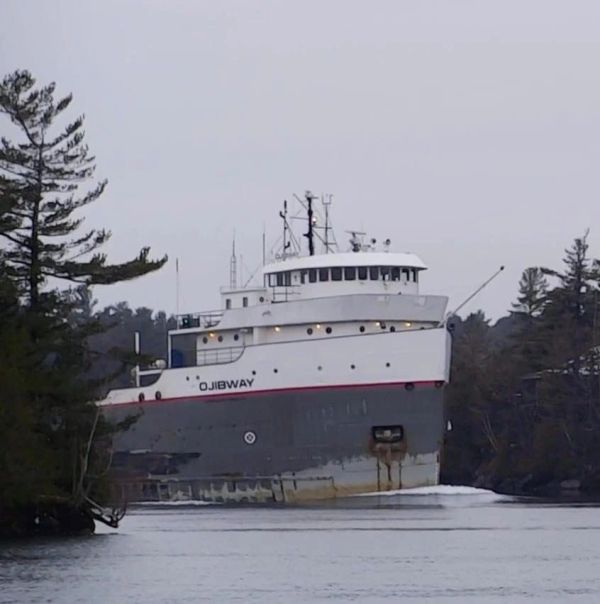
      MV Oijbway

      renamed Ojibway 2008

      642' length

      67' beam

      14-5 knots

      Flagged Canada

      launched 1952

      scrapped 2023


      © Meg Meakin  

      MV Sunco CHIPPEWA, Chemical/Oil Products Tanker:

      154 meters length

      22.7 beam

      Flagged in Liberia

      launched 1980

      scrapped 2005

      ©Sunco

      MV Mississagi Type L6-S-B1

      620' length

      6o' beam

      Flagged Canada

      launched 1942

      scrapped 2022

      wikicommons
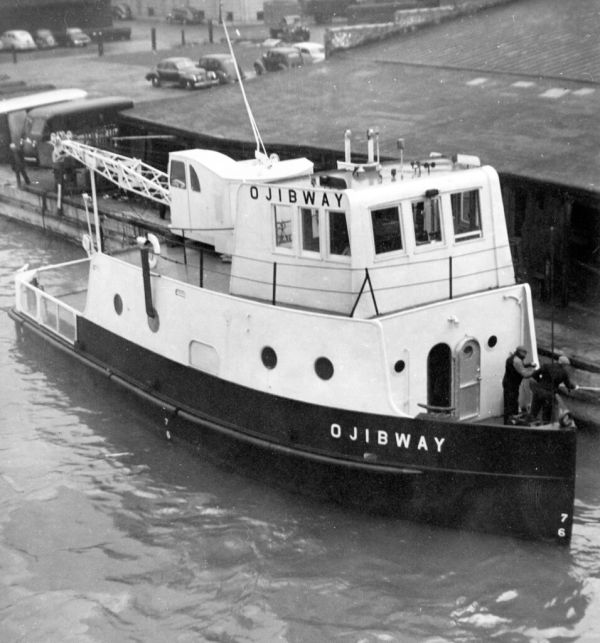
      Tug/supply vessel Ojibway

      60' length

      26' beam

      Flagged USA

      launched 1943
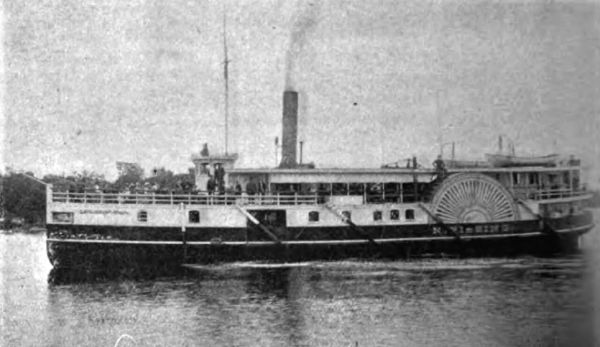

      SS Nipissing in 1893

      Built 1871 burned and sunk 1887. Raised and rebuilt with the Niipissing name as a sidewheel steamer. converted and renamed RMS Segwun (Ojibwe for "Spring") in 1925. The vessal is the oldest operating steamer in North America.

      125' length

      21' beam

      Flagged Canada

      launched 1887

      wikicommons
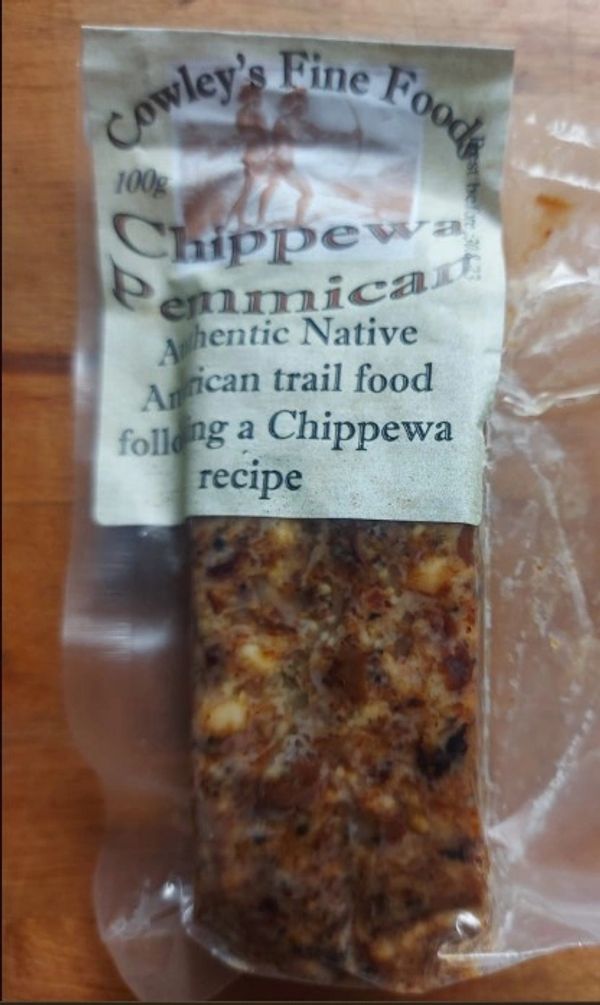
      Chippewa Pemmican

      Chippewa Pemmican — Cowley's Fine Foods, Trealaw, Wales (United Kingdom). A commercially produced pemmican marketed as "Authentic Native American trail food following a Chippewa recipe." This illustrates the international reach of the Chippewa ethnonym in modern commercial products. 
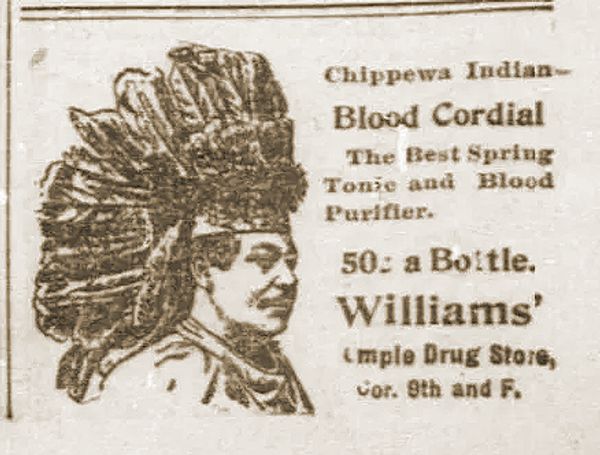
      Chippewa Indian Blood Cordial

       Marketed as "The Best Spring Tonic and Blood Purifier," This product demonstrates how the Chippewa name was employed commercially during the patent medicine era. The product illustrates another example of the historical documentary and commercial footprint associated with the Chippewa exonym. 

      Commerical use of the Chippewa name :

      ©Chippewa Boots, easily the the most successful product to use the "Chippewa" name. The product was marketed for what the name implies: Durability and Toughness. This image documents the commercial footprint of the ethnonym Chippewa.

      Chippewa Boots became one of America's best-known work boot brands, widely worn in the construction, trucking, agriculture, forestry, mining, manufacturing, and heavy industrial trades. Founded in 1901 in Chippewa Falls, Wisconsin, the company helped keep the Chippewa name in everyday American commerce for more than a century. Worn by generations of working Americans, the brand became synonymous with rugged durability, dependable craftsmanship, and work performed under demanding conditions. Because every pair bore the Chippewa name, the brand's reputation became inseparably linked to the Chippewa ethnonym itself, making it one of the most enduring commercial footprints of an Indigenous name in North America. In later years, the company became part of Berkshire Hathaway, and U.S. manufacturing eventually ceased as production moved overseas. © Chippewa Boots

      Chippewa product labels were preprinted for retailers to add the product name for canned goods. This one had Evaproated Milk added. For these type products the name had the connotation for being natural and healthy.

      Chippewa Wagon Works brass sign. Records for the company are not online, but it is believed they were in operation ca. 1880s -1910s, producing the various types of wagons typical for the time. The name conveys that the product was durable. What is notable is Albany, New York was Mohawk land and that name was not used.

      Chippewa Grass Rugs advertisement from The Elkins Inter-Mountain (Elkins W. VA) newspaper October 16, 1920, p.3. A simular ad can be found in The Washington Daily News (Washington D.C.) June 1, 1926, p.7.

      Chippewa Salt was named for the Chippewa that lived in the Mingo town area, in the Province de Quebec, now Ohio.

      "A Survey of Prehistoric People in the Cuyahoga Lands," https://sites.google.com/site/deepcovercleveland/home/prehistoric-indian-earthworks-in-the-city-of-cleveland-and-environs
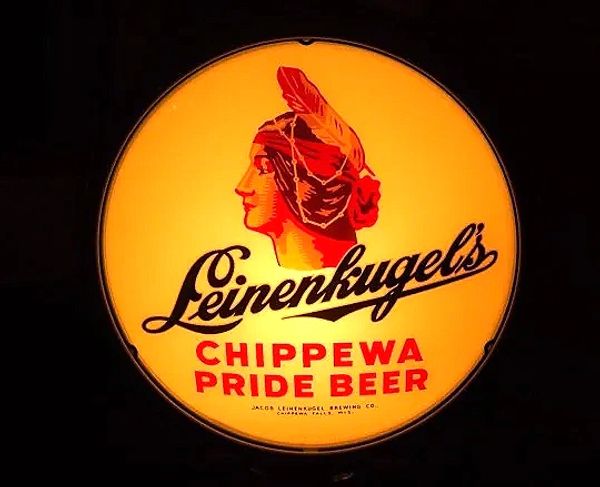
      Leinenkugel"s Chippewa Pride Beer lighted sign, ca. 1920-50. Chippewa Falls, Wisconsin. The woman appears to be wearing a eagle feather.

      ©Leinenkugels

      Chippewa Pride Beer serving tray, ca. 1910-50. Both the light above and the tray are highly collectable. A light in mint condition could bring $4,000. A barely used Chippewa Pride tray goes for $600.

      ©Leinenkugels

      Chippewa Spring Water, Chippewa Falls, Wisconsin. The image was revised to a more woodlands appearace replacing the sterotypical headress.

      ©Purelifewater.com.

      Studebaker Chippewa Green

       The Chippewa and Ojibwa ethnonyms also entered the vocabulary of commercial color marketing. Automobile manufacturers, paint companies, and specialty finish manufacturers adopted the names for factory paint colors and decorative finishes, further extending the public and commercial footprint of the ethnonyms. 
       

      • Studebaker (1953–54) — Chippewa Green (factory automobile). 
      • Sherwin-Williams — Chippewa Green. 
      • Sherwin-Williams — Chippewa Red. 
      • Sherwin-Williams — Chippewa Flat Red. 
      • Krylon — — — — — Chippewa Sandstone. 
      • Segreto Finishes —  Chippewa Square (SF-6K) yellow-green 
      • Segreto Finishes — Ojibwa, an earth-brown finish. 
      • TouchUp King ——  Chippewas of Nawash Red 40147 (automotive touch-up color).

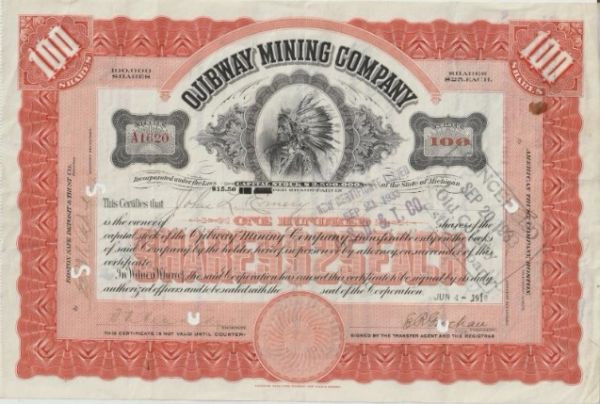
      Ojibway Mining Company stock certificate dated: 4 June 1919, Incorporated in Michigan. This image documents the commercial footprint of the ethnonym Ojibway.

      © numismaclub.com
       

      Chippewa SC - Medium Lift VTOL Fixed Wing Aircraft, defense sector only,

      ©IO Aircraft Inc

      The ethnonyms in the nautical, equestrian and canine worlds:

      These examples show the transmission of the nation’s ethnonyms beyond direct references to the people themselves—into a second or third level of everyday society, where the names became part of boats, horses, dogs, sports, recreation, commerce and popular culture.


       Named Chippewa

      • Chippewa, Side Wheel Steamboat1832
      • Chippewa, Side Wheel Steamboat1840
      •  Chippewa, Side Wheel Steamboat1846
      • Chippewa, Stern Wheel Steamboat1857
      • Chippewa, 1865
      • Chippewa, Stern Towboat 1866
      • Chippewa Falls, Stern Wheel Steamboat 1858
      • Chippewa Valley, Stern Towboat 1859
      • Chippewa Falls, Stern Towboat 1861
      • Chippewa, barge with steamer Columbia 1901
      • Chippewa Chief,  a three cylinder motorboat.  She competed in a ten-mile race for three-cylinder boats at the Mississippi Valley Power Boat Association regatta in Dubuque, Iowa. winning in  31 min., 50.4 sec. at 18.8 mph.  Luxemburger Gazette (Dubuque, Iowa), July 11, 1911, p.12
      • SS Chipowa (British) 1879
      •  Chippewa, 1888 Lord Cholmondeley's brown colt — 2nd, Ascot Stakes, 1888 
      •  Chippewa, Thoroughbred, first race at Pimlico, April 30, 1907,  seven-furlongs. Canadian
      • Chippewa, Thoroughbred,  fifth race Santa Anita, January 1907 mile three sixteenths
      • Chippewa Thoroughbred, fifth race Butte, Aug. 1908 
      • Chippewa, Standardbred, foaled 1926. Sire: Arion Guy; dam: Honeysuckle19. 
      • Chippewa Chief, Appaloosa stallion, foaled 1975, Australia. Champion Appaloosa; winner of the 1978 High Point Junior Horse of Australia and holder of AAA Achievement Award No. 1. 
      • Chippewa, Thoroughbred, France, foaled 1994. Mare, by Cricket Ball, out of Vaika. 
      • Chippewa, Thoroughbred, France, foaled 1994. Stallion, with a pedigree including Olden Times, Relic, War Relic, Tourbillon, Loika, Bridal Colors, and Black Toney. 
      • Chippewa, Thoroughbred, foaled 1996. Bay stallion, Crystal Springs Farm, Kentucky. Pedigree tracing to Man o' War, War Admiral, Ribot, Tenerani, Pocahontas, and Princess Pout. 
      • Chippewa, Crossbred, foaled 1999. Sire: Comes a Time2; dam: Winner32. 
      • Chippewa, Hanoverian, foaled 2000. Sire: Contucci; dam: Mardina2. 
      • Chippewa, Paint, foaled 1959. Sire: Monterrey 2; dam: Paint Mare. 
      • Chippewa, Thoroughbred, foaled 1998. Sire: Shuttlecock Corner; dam: Collet2. 
      • Chippewa, Thoroughbred filly, foaled 2017, Kentucky Raced in 2022–2023 and won at Emerald Downs on January 18, 2023. 
      • Chippewa Amoire, gelding, 22 wins, $94,413
      • Chippewa Andra, Standardbred mare, Indiana,13 wins $137,841  
      • Chippewa Ce Ce, mare, $3,073
      •  Chippewa Chief, Morgan Sire of the Celebrated Racehorse Chiquita 1870
      • Chippewa Chief, trotter Fargo Fall Fair track, N. Dakota 1882 in the 6th and 9th race same day
      • Chippewa Chief, trotter, 1893 won Riverside Park
      • Chippewa Chief, Percheron stallion No. 51792, 1917 Ohio
      • Chippewa Chief, Church hill Downs 1950, Keeneland 1950 1st place, New Orleans 1950 1st Place, Arlington Park 1951, New Orleans 1952
      • Chippewa Chief, Appaloosa stallion 1959
      • Chippewa Chief,  Quarter Horse, Sorrel 1965 
      • Chippewa Chief,  Appaloosa Stallion Bay 1975 
      • Chippewa Chuck, Appaloosa, Pennsylvania 
      • Chippewa Court , Thoroughbred, Won at Indiana Downs on May 16, 2007, six furlongs 
      • Chippewa Chrissy,  Standardbred mare, 18 wins, $72,629 reanings
      • Chippewa Gabe, gelding, 29 wins, $142,136, Illinois, 
      • Chippewa Kate, mare, $9,808
      • Chippewa Kevin, gelding, 5 wins, $14,302 
      • Chippewa Liam, gelding, 9 wins, $24,059 
      • Chippewa Mike, gelding, 7 wins, $32,224
      • Chippewa Princess, Western working horse, Little Creek Horse Show, Ohio, 1958 
      • Chippewa Queen, Quarter Horse, sorrel mare, foaled 1966 
      • Chippewa Queen, driving mare, Eau Claire, Wis. 1911
      • Chippewa Ric, gelding, 37 wins, $119,501, lifetime 1:59.3f 
      • Chippewa Street, Standardbred, Major harness-racing horse. Stakes winner, record time, 1:56.4, $232,028 
      • Chippewa Warrior, gelding, 18 wins, $99,985, lifetime 1:58.1f 
      • Chippewa Whitechief, Thoroughbred, Pennsylvania. By Weigelia, out of Chippewa. Eight starts and $53,680 in earnings. 
      • Chippeway, Thoroughbred stallion, Great Britain, foaled 1884. 3rd, Park Hill, 1887 2nd Liverpool Cup, 3rd in the Park Hill Stakes Chester Cup Steeplechase 1888, Grand Steeplechase De Paris at Auteuil, France, 1889  
      • Chippewah, Barrel racer, 2009 NBHA World Championships 
      • Chippewah Star Dust Polly, A setter placed third in the pacific Coast Derby Run 1940
      • Chippewa Brave, greyhound,  New Zealand 2003
      •  Mr. Chippewa, greyhound,  New Zealand 2025-6.  


       Named Ojibwa, Ojibwe, Ojibway

      • Ojibwa Princess — Thoroughbred mare, foaled 1992. By Regal Classic; later became a broodmare.
      •  Ojibwa — Thoroughbred racehorse, New Orleans, Louisiana. 1904 
      • Ojibwa, Thoroughbred mare, foaled 1993.
      • Ojibwe, French Thoroughbred, foaled 2022. Racing in France; recorded as a filly/mare, including a June 1, 2026 appearance in the Prix Émile Ouvry at Dieppe. 
      • Ojibway, Thoroughbred, 1931, Washington, D.C. 
      • Ojibway, Thoroughbred gelding, foaled 2001, New Jersey. By Bugatti Reef (IRE), out of Loan Officer (by Deposit Ticket). Won a maiden race at Philadelphia Park in 2004 by 5¼ lengths. 
      • Ojibway Signal, Canadian Thoroughbred gelding, foaled 2008. By Niigon, out of Apache Signal, bred in Ontario. Raced 40 times, earning more than $250,000, including the 2011 Queen's Plate. 


       Named Mississauga

      • Mississauga Brave,  Canadian 
      • Mississauga Cochina, Canadian 
      • Mississauga Kachina, Hackney Mare, Bay 1986  Canadian 
      • Mississauga Maiden,  Hackney Mare Canadian 
      • Mississauga Minnie Ha Ha, Hackney, Chestnut,1970  Canadian  
      • Mississauga Proud Chieftain, Canadian 
      • Mississauga Sirius Sioux, Canadian   
      • Mississauga Sirius Wendigo,  Hackney, Bay 1980  Canadian 


       Named Nipissing

      •  Nipissing, Thoroughbred, bay mare, Canada, foaled 2010. By Niigon, out of Kiche. Winner of the 2012 Princess Elizabeth Stakes and South Ocean Stakes and the 2013 Woodbine Oaks. Career record: 5 wins, 1 second; earnings over $600,000. 


       Names with "Mishe" = Great ( in Ojibwe)

      •  Mishe's Time, Thoroughbred, by Mishe-Mokwa. 
      •  Mishe's Rocket, Thoroughbred, by Mishe's Time, 14 wins and $73,932  earnings

      “Pe-e-shaag, may-gwa-ock”

      “Come to the Wilderness”

      Minnesota & International Road

      From Temagami to the YMCA: An Ojibway Legacy in American Family Life

      In 1926, Harold S. Keltner, a YMCA leader from St. Louis, traveled to northern Ontario on a hunting and fishing trip. His guide was Joe Friday, an Ojibwe man from the Temagami area. One evening, around a campfire, Friday explained the traditional role of an Ojibwe father:


      "The Indian father raises his son. He teaches his son to hunt, to track, to fish, to walk softly."


      The conversation profoundly influenced Keltner. Rather than seeing the Ojibwe father-son relationship as merely an interesting cultural practice, Keltner believed it offered a model that modern American families could learn from. Upon returning to St. Louis, he developed a father-and-son program for the YMCA based on the ideals Joe Friday had shared around the campfire.


      In 1926, that idea became the Y-Indian Guides program.

      What began with an Ojibwe guide from Temagami, Ontario, Canada, soon grew into one of the YMCA's most successful family programs. Local YMCA chapters across the United States organized themselves into "tribes," "longhouses," and "nations," using Native-inspired names, ceremonies, and activities to encourage fathers and sons to spend time together.

      As the program evolved, it was extended to include the entire family. Companion programs were established for fathers and daughters, mothers and sons, and mothers and daughters. What had begun as an Ojibwe-inspired model for strengthening the bond between fathers and sons grew into an inclusive family movement that served generations of American children and parents. In later years, these programs were modernized under the YMCA's Adventure Guides program, but their origins remained rooted in the vision first inspired by an Ojibwe guide from northern Ontario.

      The certificate here illustrates that legacy. Issued by the National Council of the YMCA to the "Chippewa Tribe" of the Montclair YMCA. It demonstrates that the "Chippewa" ethnonym had become part of everyday American family life. For the children who belonged to these local tribes, "Chippewa" was not simply a word in a history book—it became the name of their own organization, appearing on membership certificates, patches, banners, handbooks, and countless family activities.

      This is an example of the documentary footprint of the Ojibwe people. Unlike a place name or commercial trademark, the Y-Indian Guides program was inspired by an actual Ojibwe model of family relationships. Its roots can be traced directly to conversations between Harold S. Keltner and Joe Friday, an Ojibwe guide from Temagami, Ontario. From those beginnings, an Ojibwe cultural ideal crossed the international border and became part of the lives of generations of American families.

      Today, many people remember the Y-Indian Guides only as a childhood activity, if they remember it at all. Few outside the program realize that the program itself grew from an Ojibwe example. The certificate issued to the Chippewa Tribe is more than a nostalgic keepsake—it is a surviving artifact of a largely forgotten chapter in the public recognition of the Ojibwe people, illustrating how Indigenous ideas and identity became woven into the fabric of everyday North American life.
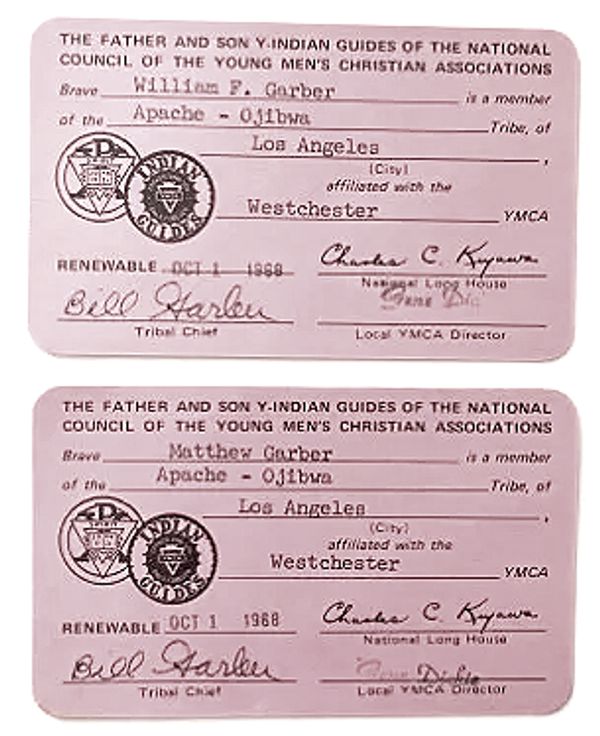

      From Temagami to the YMCA: An Ojibway Legacy in American Family Life

      The ethnonyms "Ojibwa" &  "Apache" were used as the tribal designation on Father and Son YMCA Indian Guides membership cards issued by the Westchester YMCA, Los Angeles, California, 1968. 
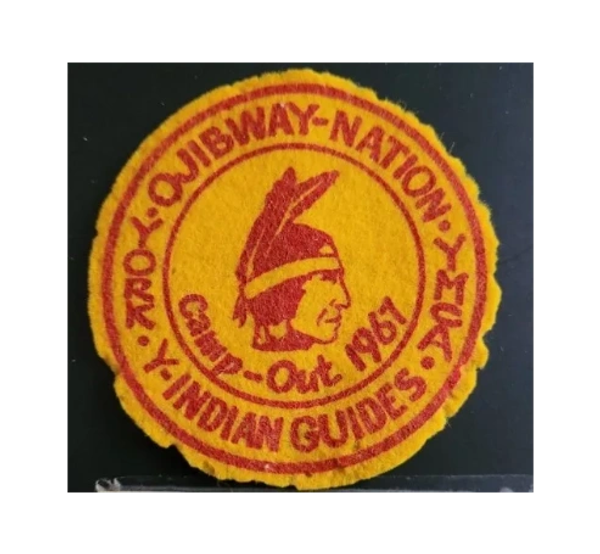

      From Temagami to the YMCA: York, Pennsylvania

      A 1967 Indian guides patch from a YMCA Indian Guides Camp Out in Pennsylvania.
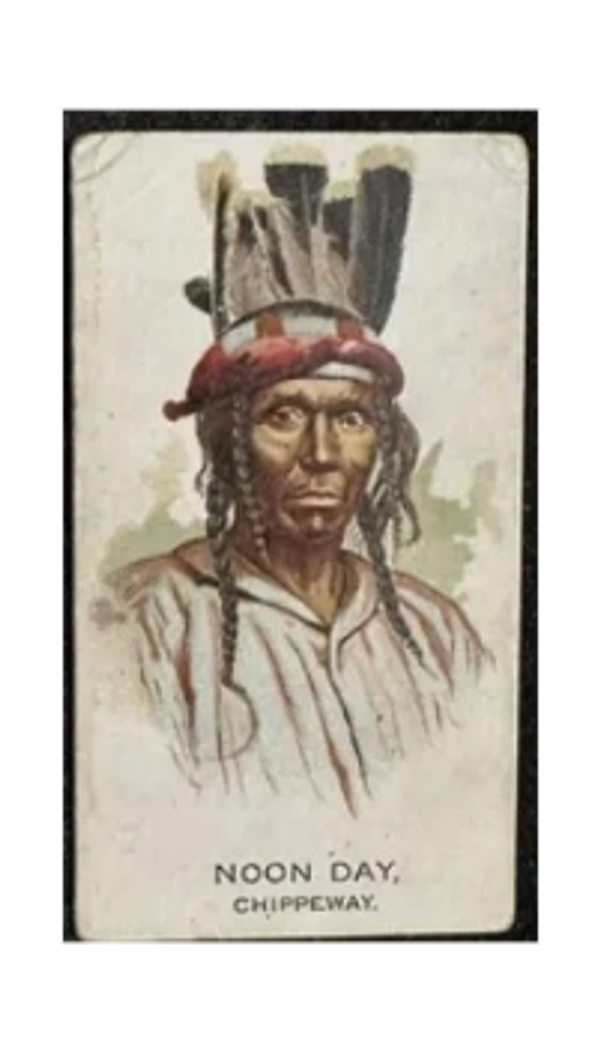

      Noon Day (Nung-da-gau) - A Leech Lake Chippeweay Chief in American Trading Cards, 1888–1950

      Noon Day (Nung-da-gau), Rabbit Lake band of the Pillagers, had one of the longest commercial lives of any Native American depicted on trading cards. First introduced by Allen & Ginter in 1888, his image was repeatedly reissued by tobacco, caramel, gum, and trading card companies for more than sixty years, appearing in at least ten known card series through 1950. His continued presence reflects the lasting public recognition of both the chief and the Chippewa/Ojibwa people in North American popular culture. 


      Year    Publisher    

      1888    Allen & Ginter: Celebrated American Indian Chiefs (N2)

      1888    Allen & Ginter:The American Indian (N36)

      1910    American Tobacco: Indian Chiefs Silks (S67)

      1911    Philadelphia Caramel: Indian Pictures (E46)

      1927    Weber Bros. Indian Chiefs (D46)

      1930    British American Tobacco: Indian Chiefs

      1933    Hamilton Chewing Gum: Tee Pee Indians

      1934    Papoose Gum: Indians

      1949    Topps: X-Ray Roundup

      1950    Teepee Gum: Indians 

      1952     Parkhurst: Tee Pee Gum  

      1954     Red Man Chewing Tobacco T129 

      1989     Renata Galasso reprint of the Allen & Ginter 
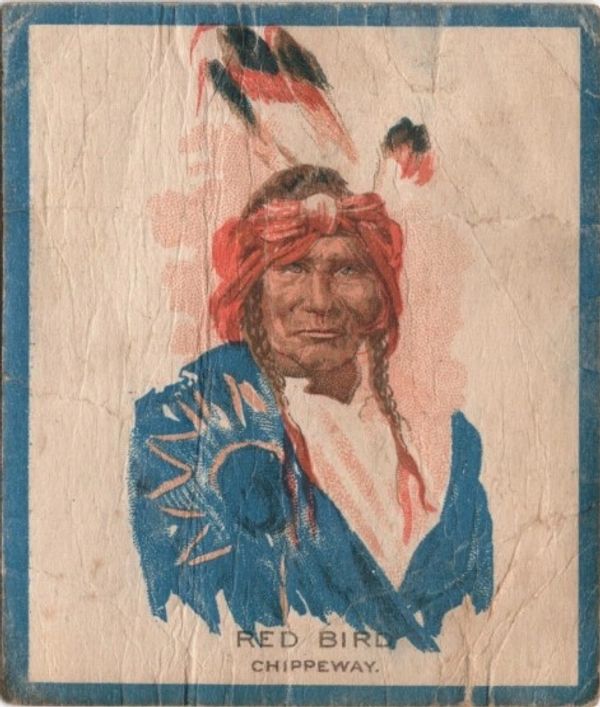

      Red Bird (Mis-co-pe-nen-shey) — Commercial Trading Card Appearances

      Red Bird's portrait, used from 1888 through 1954, demonstrates a protracted commercial footprint. Over a span of sixty-six years, at least twelve known card series introduced his image to successive generations of Americans and Canadians. Throughout this period, the cards consistently identified him as a "Chippeway" or "Chippewa", making Red Bird one of the most enduring historical figures represented in North American commercial trading cards. The card here is from the Canadian Chewing Gum Co.


      Year    Publisher    

      1888    Allen & Ginter: Celebrated American Indian Chiefs (N2)

      1888    Allen & Ginter:  The American Indian (N36)

      1910    American Tobacco:  Indian Chiefs Silks (S67)

      1911    Philadelphia Caramel Co.:  Indian Pictures (E46)

      c(D46)

      1927    Weber Baking Co.: Indian Chiefs (D46)

      1930    British American Tobacco: Indian Chiefs #22

      1930    Canadian Chewing Gum Co.: Indian Chiefs (V253)

      1933    Hamilton Chewing Gum: Tee Pee Indians (V416)

      1934    Canadian Chewing Gum Co.:  Papoose Gum Indians (V254) #10

      1949    Topps: X-Ray Roundup

      1950    Tee Pee Gum: Indians

      1952    Parkhurst: Tee Pee Gum #10 

      1954    Red Man Chewing Tobacco:  American Indian Chiefs (T129) #8 

      1968    A&BC Gum Ltd. Famous Indian Chiefs Stamps, No. 12, Chief Red Bird – Chippeway Tribe

      1972    Wagon Wheels, # 25
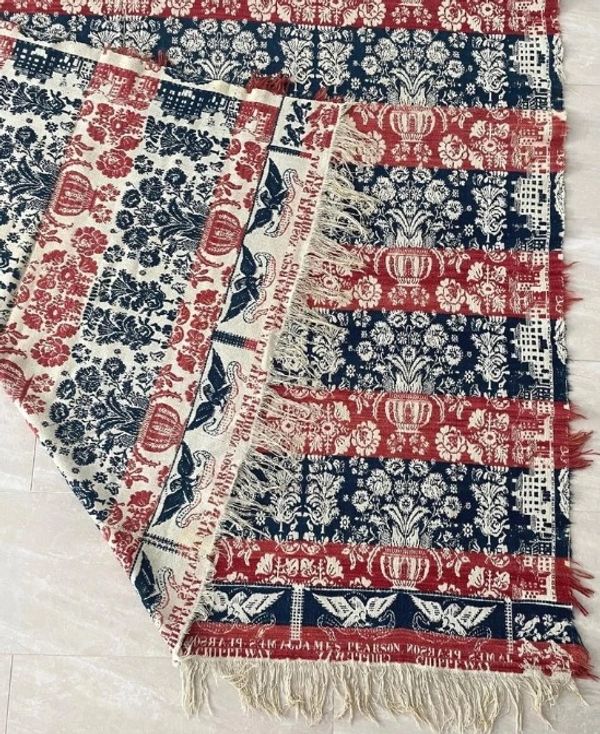
      ca. 1830-50 James Pearson, Chippeway, Ohio Jacquard Coverlet 74"x84"

      Jacquard Coverlet, ca. 1840s–1850s. The woven border (selvage) repeatedly identifies the maker, James Pearson,  Chippeway township  Ohio, where the coverlet was woven. 


      Organized in 1815, the township was named for the Chippeway  people. The border alternates normal and mirror-image versions of the word CHIPPEWAY, allowing the inscription to be read correctly from opposite sides of the coverlet, red on one, white on the other. The ethnonym  serves not only as a place name, but also as a repeating decorative element in the textiles' design.


      More than a nineteenth-century textile, this coverlet serves as a visual metaphor for the historical journey of the Chippewa ethnonym. Woven repeatedly into the border as both identification and ornament, the name became part of the fabric itself. In much the same way, the ethnonym became woven into the fabric of North American life—appearing on maps, townships, railroads, businesses, schools, military units, and countless other aspects of everyday culture. As the name became increasingly familiar, its connection to the Ojibwe people was often overlooked, even though it remained present in plain sight. 

      Ojibwe products:

      Manoomin - wild rice produced by the ©White Earth Nation

      ©Rocky Boy's Kamut Flour.

      ©Canoe brand - wild rice White Earth Nation

       Produced by the White Earth Nation.

      © Wild rice Red Lake Nation

       Produced by the Red Lake Nation.

      Ziibaakdakaan, Maple Syrup

      © Produced by the Chippewas of Nawash Unceded First Nation at Neyaashiinigmiing (Cape Croker), Ontario. 


      Powered by

      • Overview
      • Page 1 Chronology
      • Page 2 Chronology
      • Page 3 Military legacy
      • Page 4 Artifacts & more
      • Page 5 History & Sports
      • 6. Recognition-Enthnonyms
      • Page 7 Hiawatha
      • Page 8 Dance
      • Page 9 Leadership-Leaders
      • Page 10 Women
      • The Bear Blog
      • FAQ

      This website uses cookies.

      We use cookies to analyze website traffic and optimize your website experience. By accepting our use of cookies, your data will be aggregated with all other user data.

      Accept